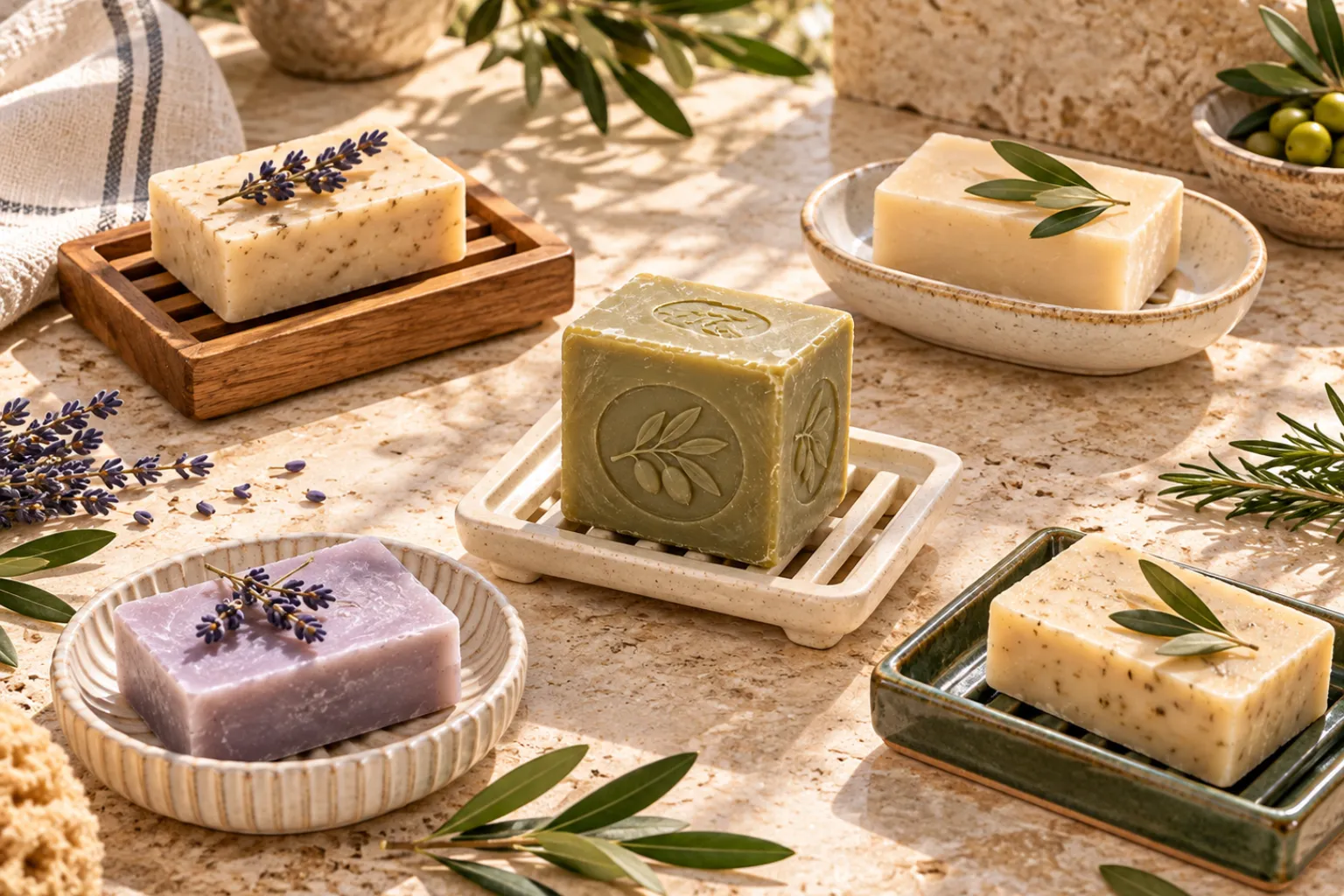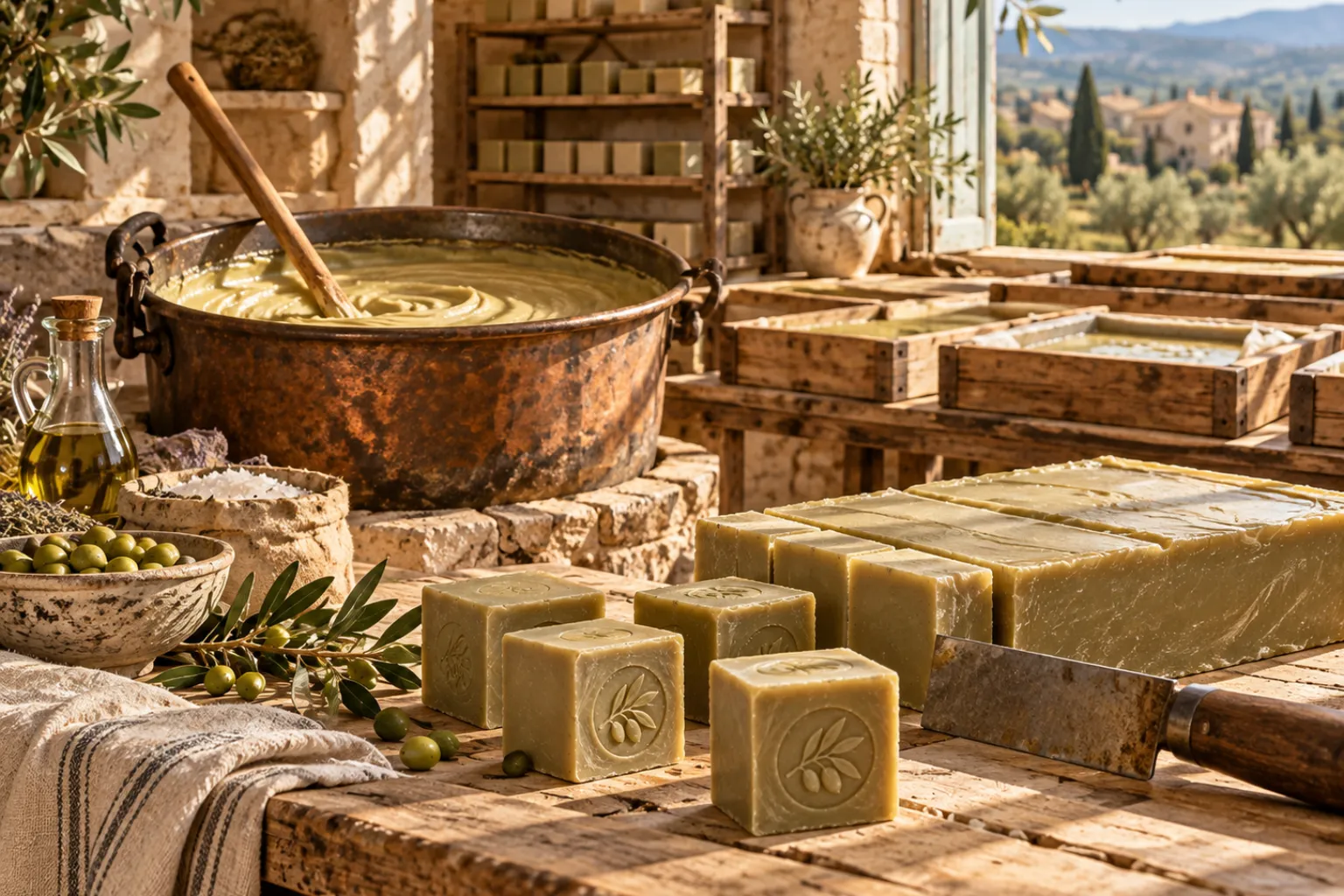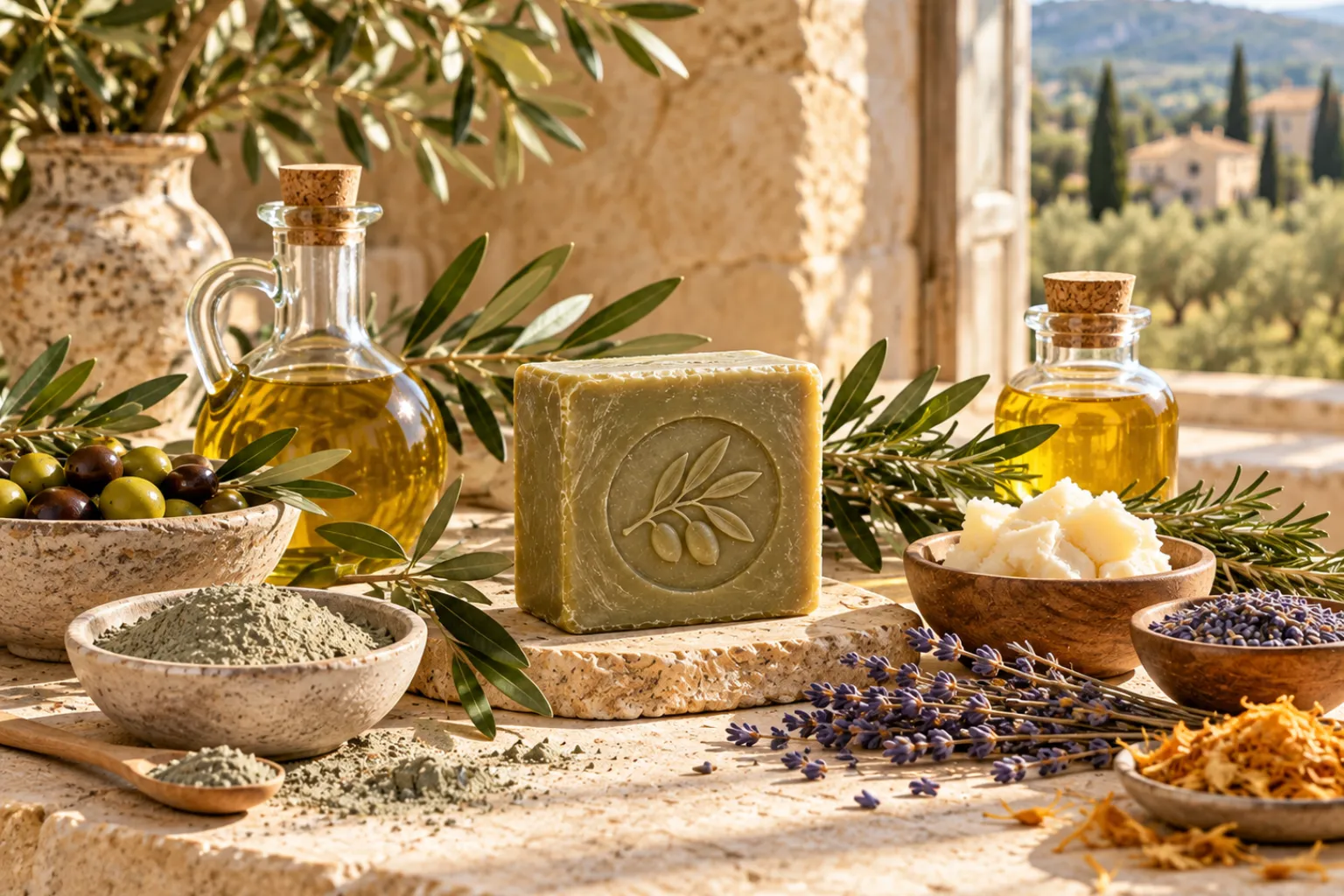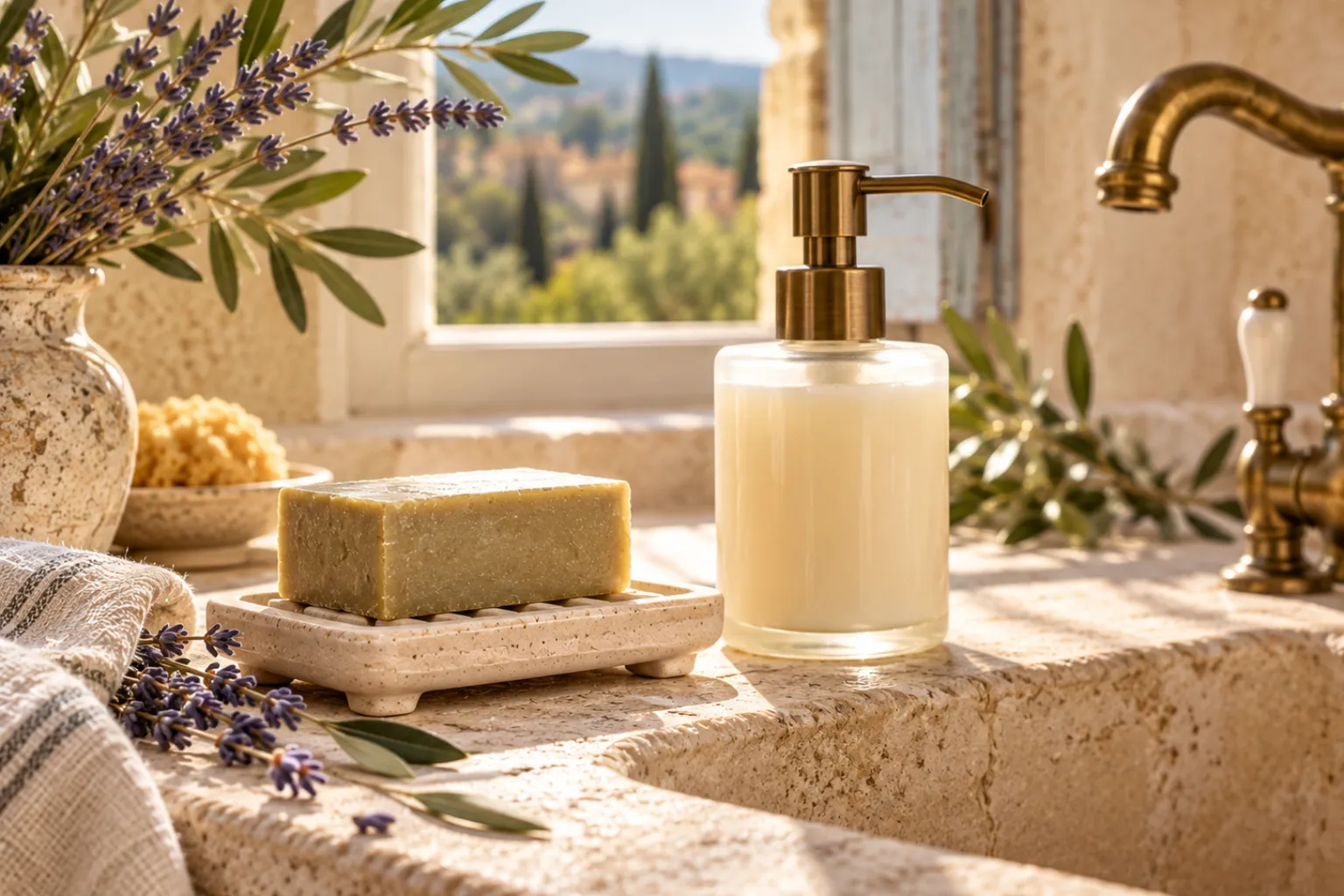
Walk down the soap aisle in any American store and the bottles win: rows of body wash, then a small shelf of bars at the end. It wasn't always that way, and plenty of people are switching back. Here's a straight comparison of bar soap vs body wash: what each one is, whether bar soap is sanitary, and the practical differences that matter day to day.
They're not the same thing
The biggest difference is chemistry. Bar soap is usually true soap: oils or fats that have reacted with lye. On the label you'll see names like sodium palmate, sodium olivate or sodium cocoate, which are simply oils turned into soap. If you want the full story, see How soap is made.
Body wash is usually not soap at all. Most body washes are made from synthetic detergents, also called surfactants, such as sodium laureth sulfate or cocamidopropyl betaine. Those are dissolved in a lot of water, then thickened, scented and preserved so they stay fresh in the bottle. US regulators actually treat most body washes as cosmetics rather than soap.
Some bars are synthetic too. "Beauty bars" and "syndet bars" are solid detergents rather than true soap. The ingredient list tells you which you have. Our guide to soap ingredients explains how to read it.
Bar soap vs body wash at a glance
| Bar soap | Body wash | |
|---|---|---|
| What it is | Usually true soap, from oils and lye | Usually synthetic detergents in water |
| Ingredient list | Often short | Often long: thickeners, preservatives, conditioning agents |
| Water content | Low, the bar is mostly soap | High, water is usually the first ingredient |
| Packaging | Paper, a box or none | Plastic bottle and pump |
| Travel | Not a liquid for TSA purposes | Limited to 3.4 oz in carry-on bags |
| Lather | Rub on hands, a cloth or the body | Usually needs a loofah or pouf for big foam |
| Storage | Needs a dish that drains | Sits anywhere |
Is bar soap sanitary?
This is the question that sent many Americans to body wash, so it's worth answering directly. Yes, bacteria can live on the surface of a used bar, especially one sitting in a puddle. But researchers have tested whether those bacteria pass to the next person who washes, and the answer has been no. A study published in 1965 and a larger one in 1988 deliberately loaded bars with bacteria, had people wash with them, and found the bacteria were not transferred to their hands.
The reason is simple. Lathering and rinsing carries the surface of the bar away with the water. What matters most is how you wash, not whether the soap came from a bar or a bottle. Public health guidance on handwashing focuses on the steps: wet, lather, scrub for at least 20 seconds, rinse and dry.
A few easy habits keep a bar clean and pleasant:
- Rinse the bar quickly after you use it.
- Keep it on a dish with slots or ridges so water drains away.
- Keep it out of the direct stream of the shower.
- In busy shared spaces, like an office restroom, use a pump dispenser instead.
Those same habits also make the bar last much longer. We cover them in detail in how to make bar soap last.
Packaging and waste
A bottle of body wash is mostly water, packed in plastic, with a pump that's hard to recycle. A bar of soap is mostly soap, and it usually comes in paper or with no wrapping at all. If you're trying to cut down on plastic in the bathroom, switching the shower to bars is one of the easiest changes to make.
Bars are also lighter to ship for the amount of washing they give, since you aren't paying to move water around.
Cost and how long it lasts
It's hard to compare price per ounce directly, because body wash is mostly water and people tend to use more of it than they need, especially with a pump or a pouf. A hard, dense bar used with wet hands goes a long way, and a bar kept dry between uses lasts far longer than one left in a puddle.
Our bars are 4.4 oz each. A single bar is $8.95, and a set of 8 comes to $6.87 a bar with free shipping.
Lather and the daily routine
Body wash gives big foam with a pouf, and some people love that. Bar soap gives a lather you work up between your hands or on a washcloth, and many people find it feels more direct and less fussy. A hard French bar lathers quickly in warm water and rinses clean.
The other big difference is scent. A bar sitting on a dish scents the whole shower or sink area even when you aren't using it. With dozens of scents to pick from, it's easy to keep a few bars going at once, one for the shower, one at the bathroom sink and one in the kitchen.
Travel and the gym
Bars are easy to travel with. Because a bar of soap isn't a liquid, it doesn't count toward the TSA's 3.4 oz limit for carry-on bags, and it can't leak into your suitcase. Let it dry before you pack it, and carry it in a small tin or a cloth bag.
When body wash makes more sense
To be fair, there are times a bottle wins:
- Shared or public spaces where many people wash in one place.
- Showers with nowhere to put a dish that drains.
- Personal preference. If you love using a pouf, that's a perfectly good reason.
Bars for the shower
If you'd like to try bars in the shower, fresh scents are an easy start in the morning: Lemon Verbena, Mint or Lemon. For something with a little texture, try Eucalyptus Scrub. In the evening, warmer scents like Cedarwood, Vanilla or White Musk feel right. Not sure where to start? Our soap scent guide walks through the families.
All our bars are made in Provence, France, with AOP olive oil, and each soap page lists the full ingredients. Mix any 4 for $29.95, or any 8 for $54.95 with free shipping, in Build your set.
Questions
Is bar soap better than body wash?
Neither is better for everyone. Both clean. Bar soap is true soap with short ingredient lists and little packaging. Body wash is usually a liquid detergent with more ingredients, in a plastic bottle. The right choice comes down to what you like using.
Is bar soap sanitary?
For personal use, yes. Studies going back to the 1960s found that bacteria on a used bar of soap were not passed on to the hands of the next person who washed with it. Rinsing the bar and letting it dry on a draining dish keeps it clean and firm.
Is it OK to share a bar of soap?
Many households do. Rinse the bar after use and keep it on a dish that drains. Where many people wash, such as offices or public restrooms, a pump dispenser is usually the more practical choice.
What's the difference between body wash and soap?
True soap is made from oils and lye. Most body washes are made from synthetic detergents, such as sodium laureth sulfate, plus water, thickeners and preservatives. Under US rules, many body washes are classed as cosmetics, not soap.
Can you take bar soap on a plane?
Yes. A solid bar isn't a liquid, so the TSA's 3.4 oz liquids limit doesn't apply to it. Pack it dry, in a small tin or bag.