Every bar of soap, from a plain kitchen cube to a scented bar from Provence, starts with the same three things: oil, lye and time. What changes is the choice of oil, the method, and what gets added at the end. Here is how soap is made, in plain language, and what the different methods mean for the bar you buy.
The basic reaction: oil meets lye
Soap making rests on one chemical reaction, called saponification. Oils or fats are mixed with a strong alkali. For bar soap that's usually sodium hydroxide, often called lye. For liquid soap it's potassium hydroxide. The alkali reacts with the fatty acids in the oil and produces two things:
- Soap. Salts of fatty acids. Each molecule has one end that's drawn to water and one that's drawn to oil and grease. That's how soap lifts dirt and rinses it away.
- Glycerin. A natural byproduct of the reaction. Some methods leave it in the bar, and some separate most of it out.
When the reaction is complete, there's no free lye left. That's why a soap label lists the result rather than the lye itself. Olive oil soap shows up as sodium olivate, coconut oil soap as sodium cocoate, palm oil soap as sodium palmate. Our guide to soap ingredients goes through these names one by one.
Why the oil matters
Each oil gives soap a different character:
| Oil | What it brings to the bar |
|---|---|
| Olive oil | Low, creamy lather; a slow cure to get hard |
| Coconut and palm kernel oil | Big, quick bubbles that lather even in hard water |
| Palm oil | Hardness and a steady, long lasting bar |
| Shea and cocoa butter | Firmness and a dense, smooth feel |
Most soap makers blend oils to balance hardness and lather. A bar made only of olive oil, like traditional Castile soap, behaves quite differently from a bar built on palm and coconut.
The four main ways to make soap
Cold process soap
Oils and lye solution are mixed at a fairly low temperature and stirred until the mixture thickens to what soap makers call "trace". Fragrance, color and extras go in, and the batter is poured into molds. It keeps reacting for a day or two, then it's cut into bars and left to cure for about four to six weeks, while water evaporates and the bar hardens.
Cold process soap keeps all its glycerin. It's the method of most small handmade soap makers, and it allows swirls and layers of color. The downside is time, and scents can shift or fade a little because they go in while the reaction is still running.
Hot process soap
The same ingredients are cooked, so the reaction finishes in a few hours instead of days. The soap is thick and lumpy when it goes into the mold, which gives hot process bars their rustic, textured look. They can be used sooner, though they still benefit from drying.
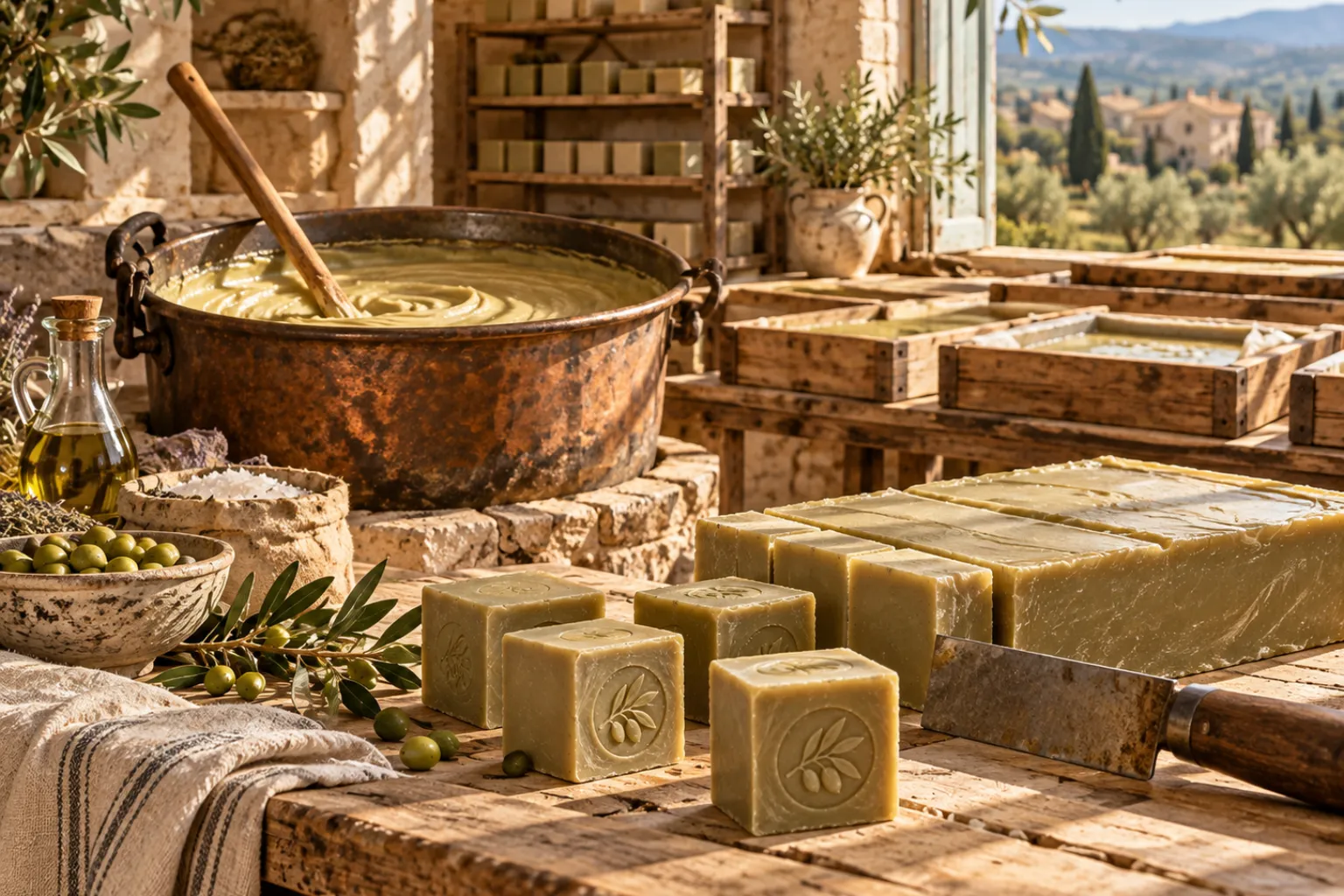
The traditional kettle method of Savon de Marseille is a large scale cousin of this. Oils and alkali are cooked in huge kettles over several days, washed with salt water to separate the soap from excess lye and glycerin, then poured, dried, cut into cubes and stamped.
French milled soap
Milled soap starts with soap that's already made. That base is dried and shaved into thin flakes or "noodles". The flakes are mixed with fragrance, color and any extras, then passed through steel rollers that crush and blend them into an even paste. Finally the paste is pressed through a machine called a plodder, which pushes out a dense, solid log. The log is cut, and each piece is stamped into a bar.
The result is a hard, smooth, uniform bar with very little water in it, so it wears down slowly. Because the fragrance is added after the soap is made, the scent comes through clearly. This is how most scented bars from France are made, and why "French milled" became a byword for a well made bar.
You'll also see "triple milled", meaning the soap went through the rollers three times. It's a description, not a regulated standard. We don't use it for our bars; we'd rather show you the ingredient list.
Melt and pour soap
A ready made base, often clear glycerin soap, is melted, colored, scented and poured into molds. No lye is handled at this stage, because the base is already soap. It's the method behind most clear bars and novelty shapes, and a common first project for hobbyists.
Methods side by side
| Method | Time to finished bar | Texture | Glycerin |
|---|---|---|---|
| Cold process | About 4 to 6 weeks of curing | Smooth, can be swirled | All kept |
| Hot process | Days to a few weeks | Rustic, textured | All kept |
| Kettle (Marseille) | Several days of cooking, then drying | Hard, plain cube | Mostly removed |
| French milled | Fast, from a finished base | Hard, dense, even | Depends on the base |
| Melt and pour | Hours | Varies, often clear | Often added |
After the soap is made
- Drying. Every bar loses water and gets harder over time. A well dried bar lasts longer in use.
- Additions. Ground herbs, petals or clay add texture or color. Our Rosemary Scrub and Rose Petal Scrub carry plant pieces, and Green Clay has a quiet, earthy scent. More in our guide to scrub bars.
- Stamping. Many French bars are stamped with a name, which is why you'll see words like "Lavande" or "Olive" pressed into the soap.
- The label. The ingredient list, in standard INCI names, is the most reliable guide to what's actually in the bar.
What's in our bars
Our bars are made in Provence, France, with AOP olive oil. Their ingredient lists start with sodium palmate and sodium palm kernelate, the soap from palm and palm kernel oils, followed by water, fragrance, shea butter, glycerin, olive oil, salt and the colorants for each scent. That recipe gives a hard bar with a full lather that holds its scent. Each soap page shows the complete list, for example Olive Oil or Lavender.
A short history
Records from ancient Mesopotamia describe boiling fat with ashes, and plant ash is alkaline, so it served as the lye for thousands of years. Around the Mediterranean, olive oil soaps grew up in Aleppo, Nablus, Castile and Marseille. In 1688, an edict under Louis XIV set rules for soap made in Marseille. In the 1790s, the Leblanc process made soda ash cheap to produce, and soap became an everyday product. In the 20th century, synthetic detergents arrived, and many products we now call soap, including most body washes, aren't soap in the chemical sense. We compare the two in bar soap vs body wash.
A note on making soap at home
Home soap making is a satisfying hobby, but lye is caustic. Wear goggles and gloves, work with good ventilation, keep children and pets away, and follow a tested recipe from a reliable source. This guide explains the process; it isn't a recipe.
Questions
How is soap made?
Soap is made by mixing oils or fats with a strong alkali, usually sodium hydroxide (lye) for bar soap. They react to form soap and glycerin. The maker then adds scent, color or texture, shapes the soap into bars and lets them dry.
Is there lye in finished soap?
In properly made soap, the lye reacts completely with the oils, so none is left as free lye in the finished bar. That's why ingredient lists show the result, such as sodium olivate or sodium palmate, rather than sodium hydroxide.
What is the difference between cold process and hot process soap?
Both use the same reaction. In cold process, the soap is poured into molds soon after mixing and finishes reacting on its own, then cures for several weeks. In hot process, the soap is cooked until the reaction is done, so it can be cut sooner and has a more rustic texture.
What does French milled soap mean?
French milled soap starts from finished soap that is dried, shaved, mixed with fragrance and color, passed through rollers, then pressed into a dense log and stamped into bars. 'Triple milled' means it went through the rollers three times. Neither term is regulated.
Can I make soap at home?
Yes, many people do, but lye is caustic and needs goggles, gloves and good ventilation. Follow a tested recipe from a trusted source. This article explains the process and is not a recipe.