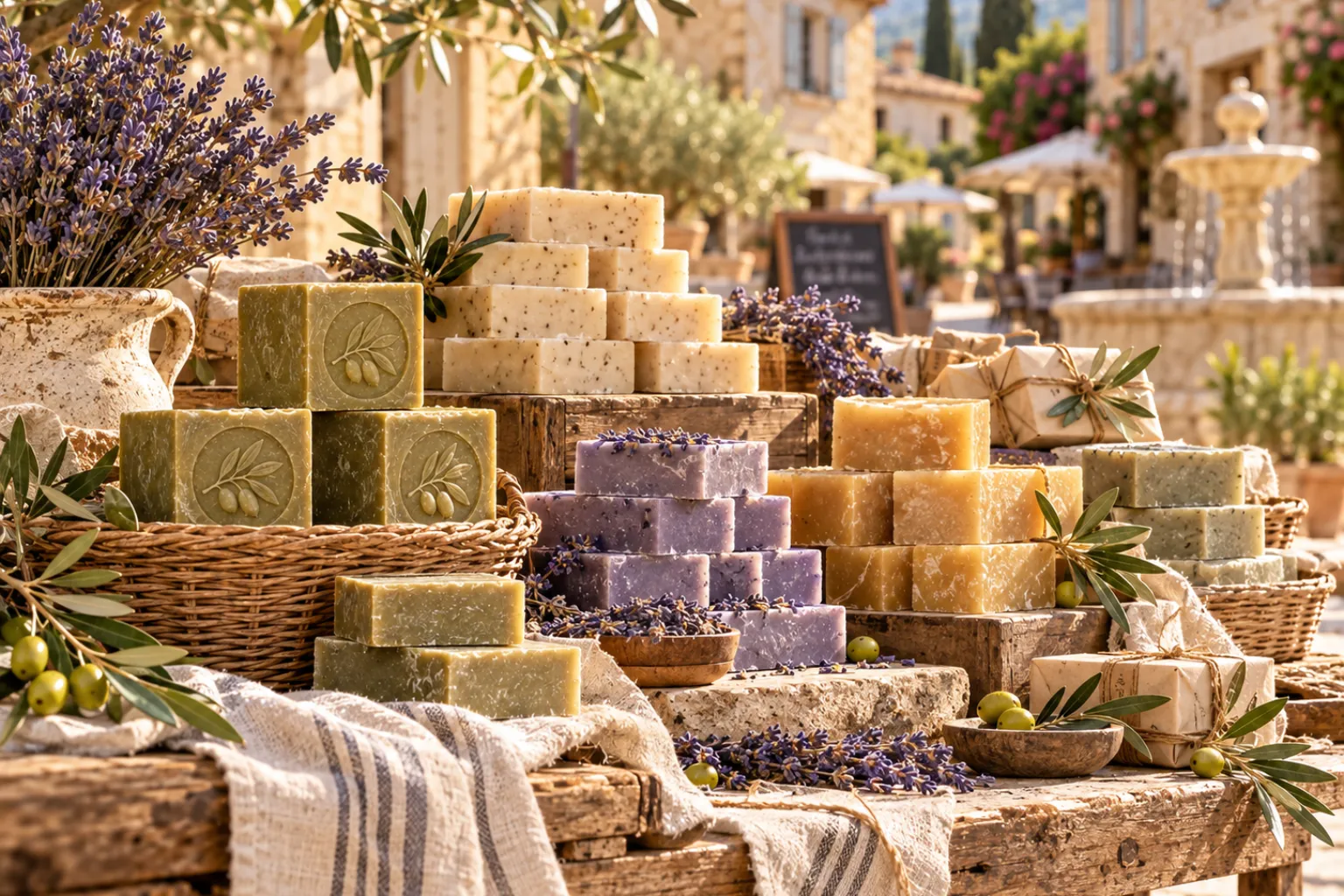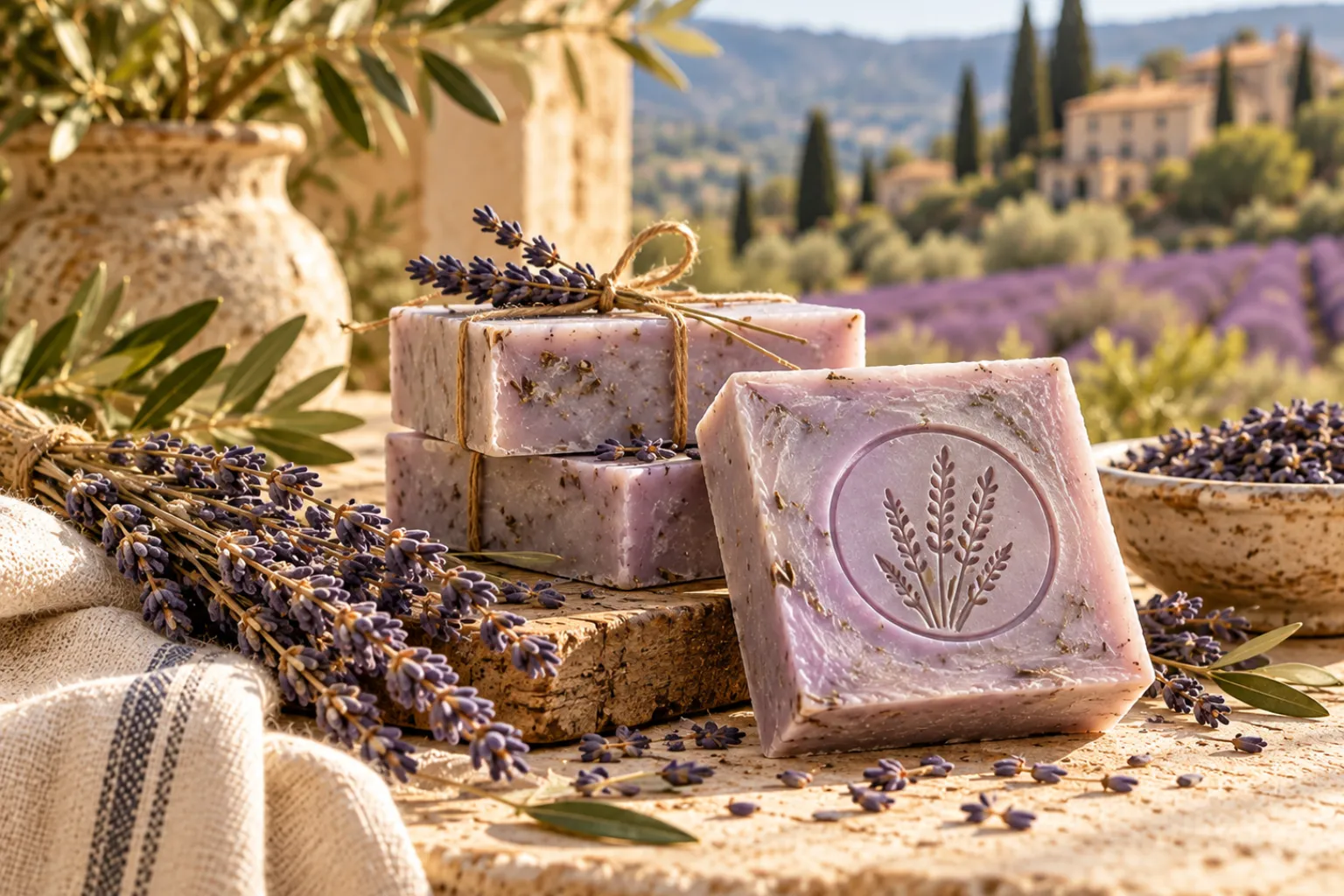
If you have one bar of French soap in your house, odds are it smells of lavender. In Provence it is the scent of the summer markets, the farmhouse bathroom and the linen closet. Here is how lavender came to stand for southern France, how to tell one lavender soap from another, and which bar to start with.
Why lavender belongs to Provence
Lavender grows wild on the dry, sunny slopes of the southern Alps, where poor stony soil and hot summers suit it well. For centuries people in Haute-Provence picked wild lavender on the hills and sold it. Around the start of the 20th century, farmers began planting it in rows, and the fields we know from postcards were born.
Today the best-known fields are on the Valensole plateau and around Sault, Banon and the Luberon. They usually bloom from mid-June through July, and the harvest runs into August. Visitors come from all over the world for those few weeks of purple.
The link to washing is old, too. The name lavender is often traced to the Latin lavare, "to wash", and lavender has scented laundry and bathwater in Europe for a very long time. A bar of lavender soap is simply the modern version of that habit. You can read more about the region's soap tradition in French soap from Provence.
True lavender vs. lavandin
Not every purple field is the same plant, and the difference matters for scent.
| True lavender | Lavandin | |
|---|---|---|
| Latin name | Lavandula angustifolia | Lavandula x intermedia (a hybrid) |
| Where it grows | Higher altitudes, often above 2,000 feet | Lower plains and plateaus |
| Scent | Soft, sweet, floral | Sharper, more herbal, a camphor edge |
| Yield | Small | Several times higher |
True lavender from the high country has its own French protected designation of origin for its essential oil, "Huile essentielle de lavande de Haute-Provence". Most of the big fields you see in photos are lavandin, which grows easily and yields far more.
What makes one lavender soap different from another
Three things: the soap base, where the scent comes from, and whether there is real lavender in the bar. The ingredient list tells you all three.
- The base. The first two or three names tell you which oils were made into soap. Our bars are made in Provence, France, on a classic palm base (Sodium Palmate and Sodium Palm Kernelate) with shea butter, glycerin and AOP olive oil. That is the standard recipe for French milled soap: a hard bar with a creamy lather. It is not Castile soap or Savon de Marseille, which are olive-oil based.
- The scent. Essential oil appears on a label under its Latin name, for example Lavandula Angustifolia Oil. Fragrance appears as Parfum. Our lavender bars are scented with fragrance, which keeps the scent steady from batch to batch.
- Real lavender. Dried flowers show up as Lavandula Angustifolia Flower. They add color and texture, not much scent.
Lavender-scented labels often name Linalool, an aroma compound found in lavender and in many fragrances. European rules require it to be listed above a set level. Our guide to soap ingredients explains the rest of the label.
Our five lavender bars
Lavender
The classic. Lavender is clean and gentle, like a sachet in a linen closet, never heavy or sharp. Its soft purple comes from ultramarine blue with a touch of red and white. If you only buy one bar, start here.
Crushed Lavender
Crushed Lavender has real dried lavender buds (Lavandula angustifolia) pressed into every bar. They give it a rustic, slightly textured surface you can see and feel. The scent is classic Provençal lavender. It suits a farmhouse bathroom and looks the part in a gift set.
Lavender Olive
Lavender Olive pairs lavender with a soft green olive note. It is less floral and more Mediterranean, a good pick for someone who finds plain lavender too sweet. It whips up a rich, creamy lather.
Lavender Fig
Lavender Fig adds green fig and fig leaf. It sits in our fruity family, and it is the bar for someone who thinks they already know lavender.
Lavender Honey
Lavender Honey softens lavender with warm golden honey. It is rounder and sweeter, nice for evenings, and a good Mother's Day pick.
Which lavender bar is right for you
| If you like | Pick |
|---|---|
| Classic, clean lavender | Lavender |
| Texture and real flowers | Crushed Lavender |
| Green, less floral | Lavender Olive |
| Fruity and unexpected | Lavender Fig |
| Soft and sweet | Lavender Honey |
What pairs well with lavender
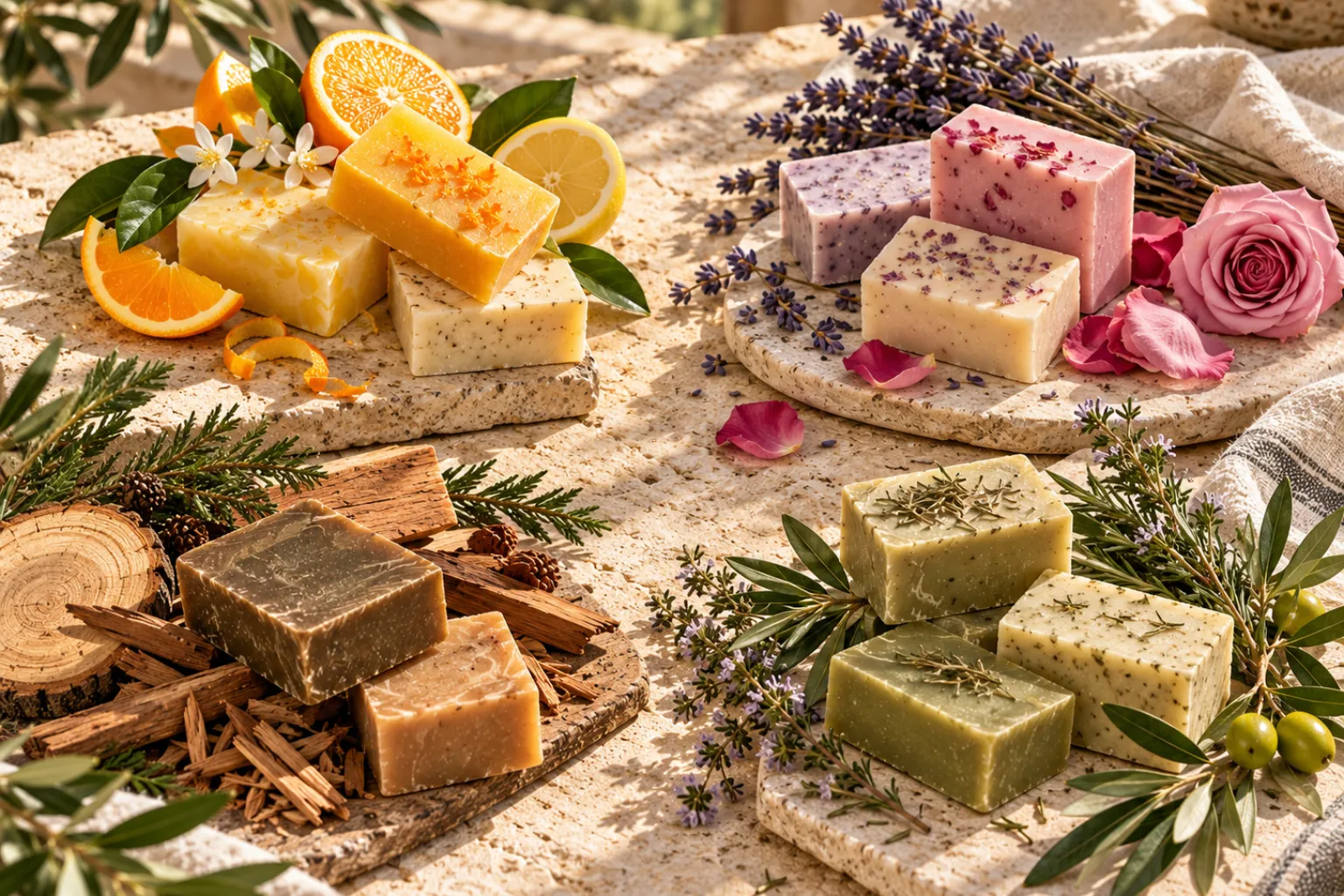
Lavender sits comfortably next to other scents of Provence. Put it in a set with Verbena for the kitchen, Rose for a floral pair, or Herbes de Provence Scrub for a bar that smells like the hills where lavender grows. For a full tour of scent families, see our soap scent guide.
Using and keeping a lavender bar
- Keep it dry between uses. A dish that drains keeps the bar firm and helps it last. More tips in how to make bar soap last.
- Store spares in a drawer. A bar among towels, sheets or sweaters scents the drawer while it waits. This is how many French households keep their soap.
- Put one by the guest sink. Lavender is the scent most guests will like, which makes it the easy choice for a shared bathroom.
Lavender soap as a gift
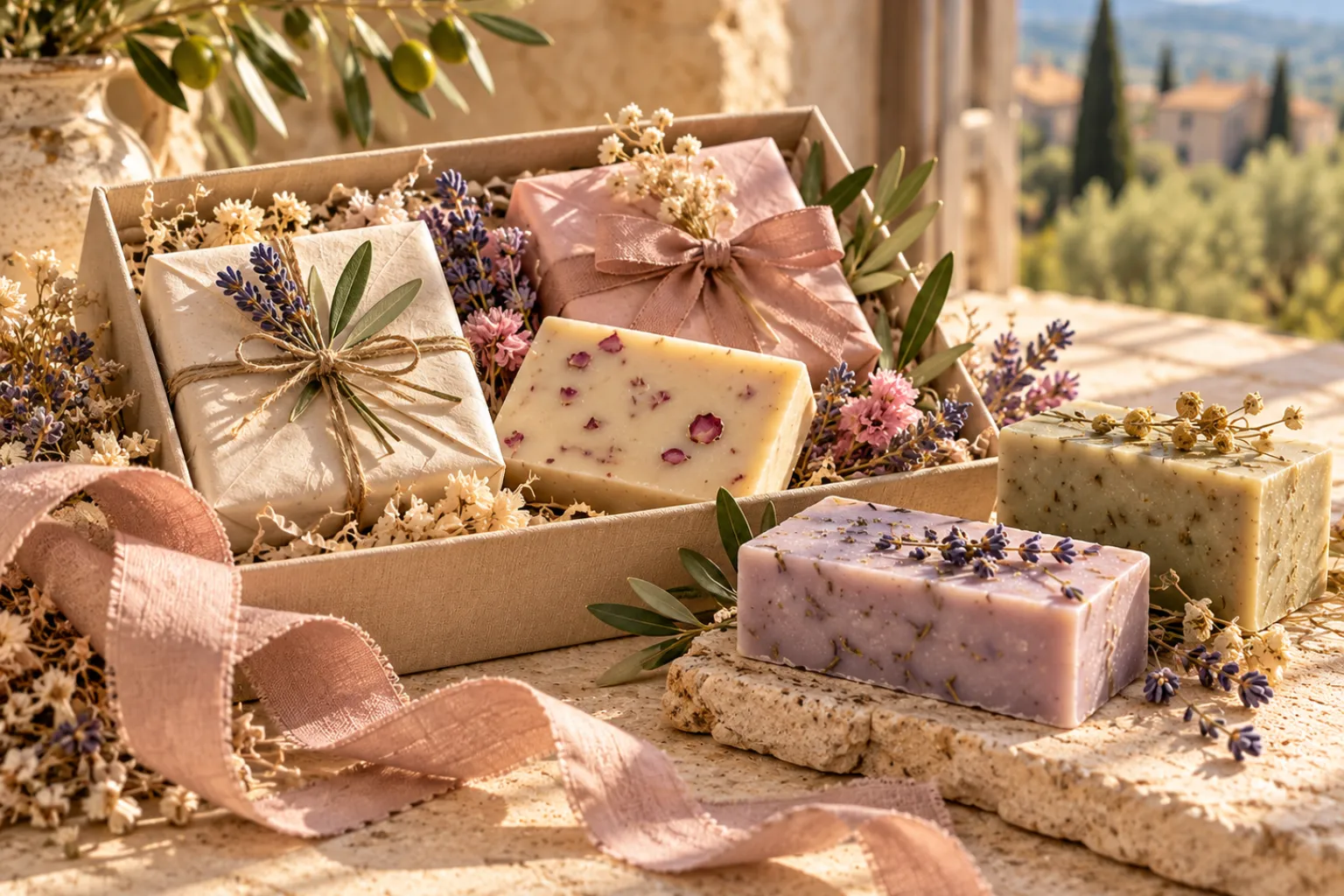
Lavender is the safest scent to give someone whose taste you don't know. For a set of 4, try Lavender, Crushed Lavender, Lavender Honey and one wild card from another family. Ideas for every person on your list are in our soap gift ideas, and you can build a set of 4 in a couple of minutes.
Questions
What does French lavender soap smell like?
Clean, herbal and slightly sweet, more like a linen closet than a bouquet. Different bars lean different ways: some are crisp and green, others softer and rounder with honey or fig.
What is the difference between lavender and lavandin?
True lavender (Lavandula angustifolia) grows at higher altitudes and has a softer, sweeter scent. Lavandin is a hybrid that grows lower down, yields much more oil and smells sharper and more camphor-like. Most of the purple fields on postcards from Provence are lavandin.
When does lavender bloom in Provence?
Usually from mid-June to late July, depending on altitude and weather. The Valensole plateau tends to peak in early July, and harvest runs into August.
Is lavender soap made with lavender essential oil?
Some is, some isn't. Check the ingredient list: essential oil appears under its Latin name, such as Lavandula Angustifolia Oil, while fragrance appears as Parfum. Our lavender bars are scented with fragrance, and Crushed Lavender also contains real dried lavender flowers.
Can I put a lavender soap bar in a drawer?
Yes. It is an old French habit: tuck a bar among linens or sweaters and it scents the drawer until you need it in the bathroom.